
Water is sneaky. It can find the tiniest crack, the smallest gap, and the most hidden corner of your home. By the time you notice a damp patch or a musty smell, the damage has often been building for weeks — sometimes months. Rot, mould, structural weakening, and sky-high repair bills are the result.
The good news is that most hidden leaks follow predictable patterns. Once you know where to look, you can catch them before they become disasters. Here are the 8 most common places water hides — and exactly what to check.
1. Behind the Bath Panel
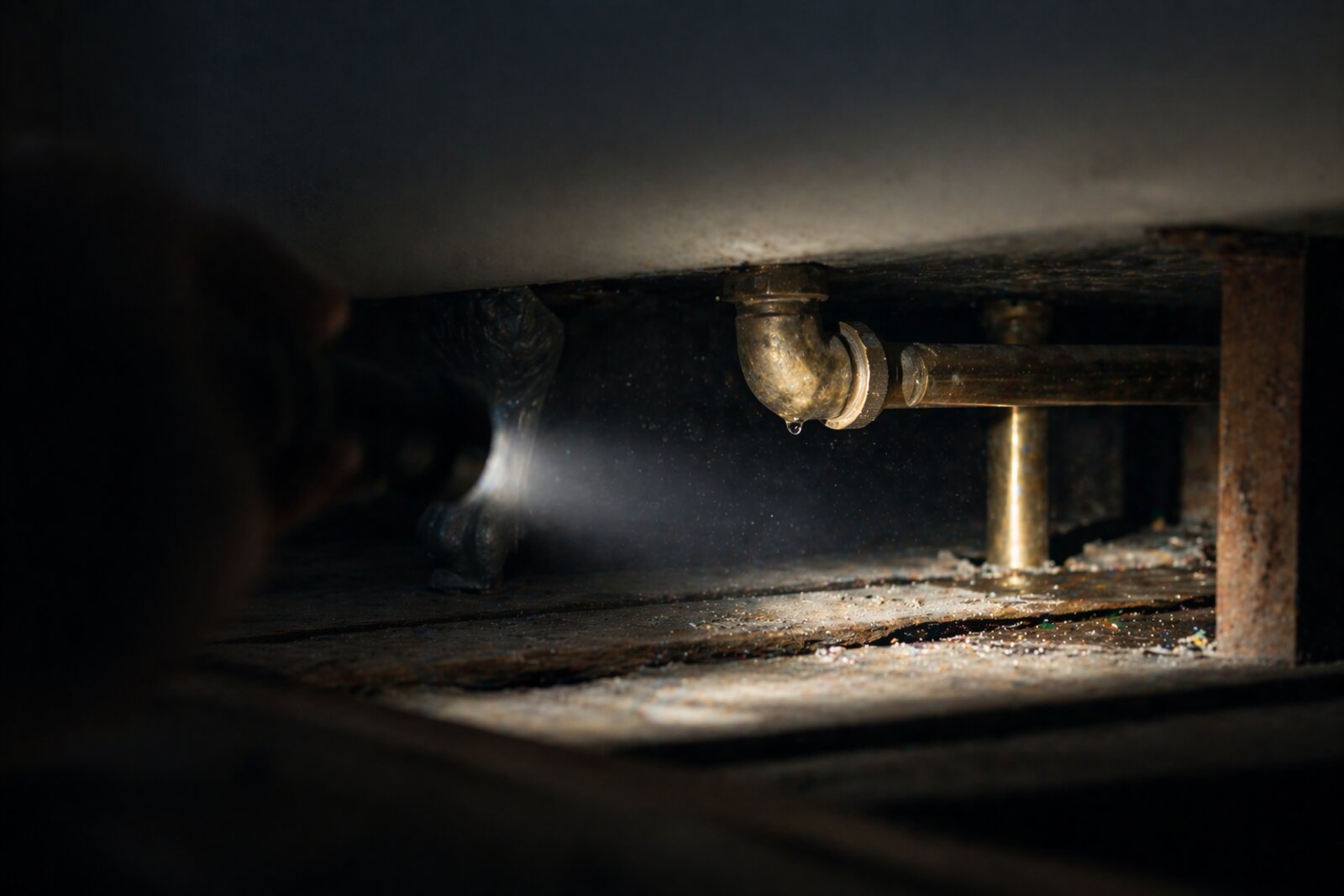
Most UK baths have a removable side panel, and almost nobody ever takes it off. Behind it is a dark, damp space with a trap, a drain connection, and often flexible hoses — all prime candidates for slow drips that never see daylight.
What to look for: Remove the panel and use a torch to inspect the trap seal and all pipework connections. Look for white limescale deposits — a sign of dried water — or any discolouration on the floorboards beneath.
Warning sign: A musty smell from the bathroom that doesn't go away after ventilation.
A small drip at the bath trap that goes unnoticed for six months can rot the subfloor entirely. Replace the bath panel — replacement can cost £3,000 or more in a bathroom refurbishment.
2. Under the Kitchen Sink
The cupboard under the kitchen sink is the most common source of slow domestic leaks in the UK. It contains the hot and cold supply pipes, the waste trap, and often the dishwasher connections — all bundled together and rarely inspected.
What to look for: Clear out the cupboard completely and look at every joint. Check the waste trap seal by running the tap and watching carefully. Check the connections behind the dishwasher if accessible.
Warning sign: The base of the cupboard feels soft underfoot, or the hinges are rusting.
The typical repair bill for a saturated kitchen base unit is £800–£2,000, including the replacement cabinet and any flooring repairs.
3. Inside the Loft
Cold water tanks, feed-and-expansion tanks, and the pipework that serves them often sit untouched for years in loft spaces. Slow drips from tank overflows or pipe joints soak into loft insulation and ceiling joists long before any visible sign appears in the rooms below.
What to look for: Look for wet or compacted insulation around the tanks. Check that the ball valve in the cold water tank is seating correctly — a constantly running overflow means the tank is overfilling. Inspect all visible pipe joints for mineral deposits.
Warning sign: Brown staining on bedroom ceilings, or a faint dripping sound when the house is quiet.
A leaking loft tank that goes undetected can cause ceiling collapse and structural timber damage — repair costs routinely exceed £5,000.
4. Behind the Washing Machine
Washing machines are moved rarely and serviced almost never. The flexible fill hoses that connect them to your water supply are under constant mains pressure — and they have a finite lifespan. Industry estimates suggest washing machine hose failures cause tens of thousands of UK flood claims every year.
What to look for: Pull the machine forward and inspect the hoses. Look for bulging, cracking, or white residue at the connections. Braided steel hoses last longer than rubber — consider upgrading if yours are original rubber.
Warning sign: Any dampness on the floor behind or beside the machine.
Hose replacement costs under £15 and takes 20 minutes. A burst hose can release 1,000 litres per hour and cause tens of thousands of pounds in damage before anyone notices.
5. Around Roof Flashings and Chimney Stacks
Water doesn't always come from your plumbing. Roof flashings — the metal strips that seal the junction between your roof tiles and vertical surfaces like chimneys, dormer walls, and skylights — deteriorate over time. Once they fail, water enters your home every time it rains, soaking insulation and timbers for years before the ceiling gives way.
What to look for: From inside the loft, use a torch to look for daylight or wet patches on the rafters after heavy rain. Externally, look for cracked, lifted, or missing lead flashing around the chimney base.
Warning sign: A damp patch on an upstairs ceiling that is only present after rain — not when the weather is dry.
Re-flashing a chimney costs £200–£600. Ignoring it can lead to rotten roof timbers that cost £10,000+ to replace.
6. At Shower Tray Edges and Tile Grout
Shower enclosures are specifically designed to hold water in — but the silicone seals around the tray edges and the grout between wall tiles eventually crack, shrink, and allow water to seep behind. Once water gets behind tiles, it soaks into the wall structure and can travel horizontally for metres before you see any sign of it.
What to look for: Run your finger along the silicone bead at the base of the shower tray. Any give, cracks, or visible gaps indicate it needs replacing. Look for loose or hollow-sounding tiles — tap them gently and listen for a change in tone. Discoloured or missing grout is also a red flag.
Warning sign: Tiles that have come off the wall without impact, or damp patches on the wall behind the shower.
Re-sealing a shower costs £30–£80 in materials and an afternoon of your time. Delaying it can mean a full bathroom strip-out and re-tile at £3,000+.
7. Below Ground Floor Timber Floors
Many older UK homes have suspended timber ground floors over a void. This void should be ventilated, dry, and clear — but in practice, it is often damp, poorly ventilated, and invisible to homeowners. Condensation, rising damp, or leaking underfloor pipework can silently rot the joists and floorboards for years.
What to look for: If you have access hatches to the underfloor void, inspect with a torch annually. Check that air bricks on the outside walls are clear and unblocked. Look for any springiness in the floor — a floor that "gives" slightly underfoot may indicate joist decay.
Warning sign: Persistent cold draughts through ground floor floorboards, or a musty smell that concentrates at floor level.
Replacing rotted ground floor joists in a Victorian terrace typically costs £4,000–£8,000 once the floor is lifted, the work is completed, and the floor is relaid.
8. At the Stopcock and Meter
The main stopcock is the first point of entry for your water supply, and it is often tucked under the kitchen sink or in a cupboard and never touched. Old stopcocks can weep slowly around the gland nut — a slow, steady drip that saturates the surrounding cabinet or floor over months. The external meter box is similarly neglected and can indicate a leak on the supply pipe between the pavement and your property.
What to look for: Inspect the stopcock gland nut for any moisture. Turn it off and on once a year to keep it operational — a stopcock seized through disuse is useless in an emergency. Check the external meter reading: note it before bed, ensure no water is used overnight, and check again in the morning. Any increase indicates a leak on your supply pipe.
Warning sign: An unexpected rise in your water bill with no change in usage habits.
Supply pipe leaks are the homeowner's responsibility from the boundary of your property. Repairs can cost £500–£3,000 depending on the pipe location and depth.
The Common Thread: Small Leaks, Big Consequences
What all eight of these problem areas have in common is that they are hidden, slow, and therefore ignored until it is too late. A leak that releases just 40ml of water per minute — barely a drip — will release over 57 litres per day. Over six months, that is more than 10,000 litres deposited somewhere inside your home's structure.
This is exactly the problem that smart water monitoring systems like the Watergate Sonic are designed to solve. Rather than waiting for visual signs, the Sonic monitors your water flow 24 hours a day, 7 days a week. When it detects an abnormal flow pattern — even one as small as 40ml per minute — it alerts you immediately and can automatically shut off your water supply before the damage escalates.
What You Can Do This Weekend
- Remove the bath panel and inspect with a torch — 10 minutes
- Clear and inspect the under-sink cupboard — 15 minutes
- Pull the washing machine out and check the hoses — 10 minutes
- Do the overnight meter test — 2 minutes to note the reading, check it in the morning
- Consider a smart water monitor for ongoing protection — one installation, lifetime peace of mind
You don't need to find all eight hiding spots yourself. A smart leak detection system watches continuously so you don't have to.
Worried about hidden leaks in your home? Contact AquaGuard Pro for a free consultation. We'll assess your property and recommend the right level of protection.